No products in the cart.
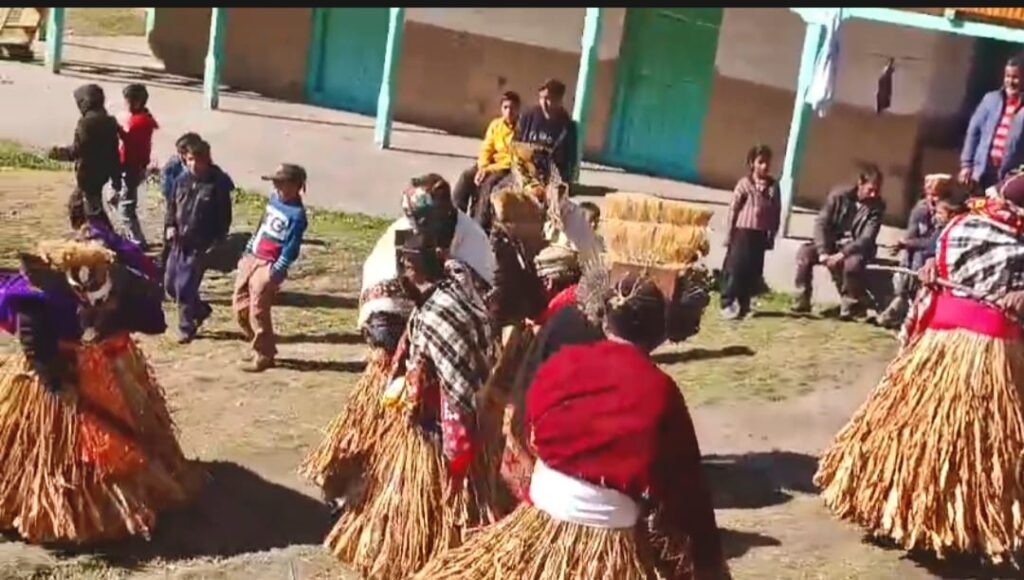
Nestled in the serene hills of Himachal Pradesh, Sharchi village in the beautiful Tirthan Valley preserves one of the region’s most captivating cultural treasures—the Mukhota (Mask) Dance. This centuries-old ritual is performed every year during the vibrant Fagli festival, usually celebrated in February, marking the end of winter and the arrival of spring.
More than just a dance, the Mukhota tradition is a sacred performance that blends spirituality, folklore, art, and community celebration into one powerful cultural expression.
The Spirit of Fagli Festival
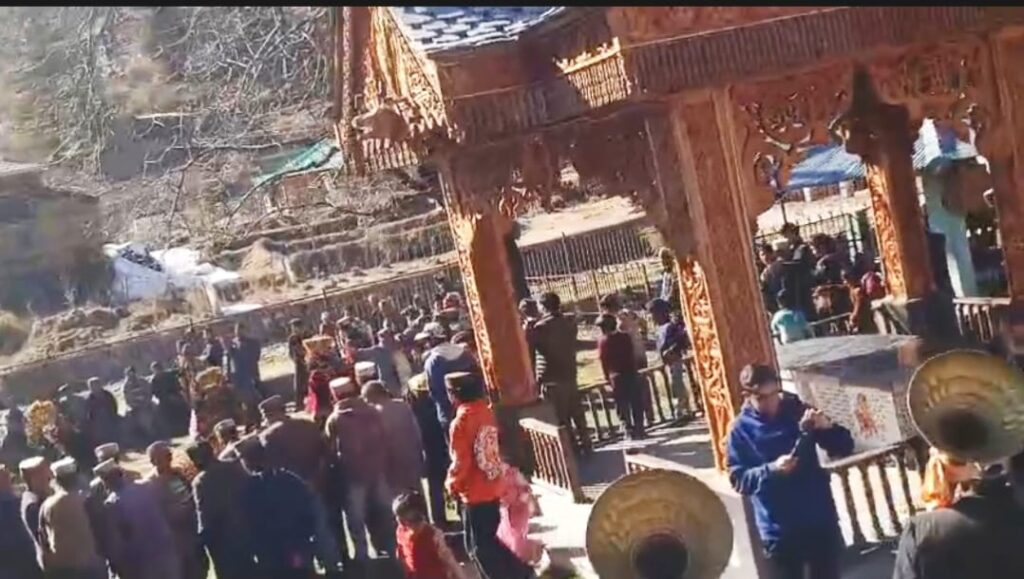
The Fagli festival is a traditional celebration observed in parts of Kullu district to welcome the new agricultural cycle. As winter loosens its grip on the mountains, villagers gather to express gratitude to local deities and pray for prosperity, protection, and harmony.
In Sharchi, the highlight of Fagli is the Mukhota dance—a dramatic and symbolic performance meant to:
- Honor local gods and ancestral spirits
- Celebrate the victory of good over evil
- Ward off negative energies and evil spirits
- Strengthen unity within the community
The entire village participates with deep devotion and festive enthusiasm.
The Sacred Masks: Mandhyala and Mandhyali
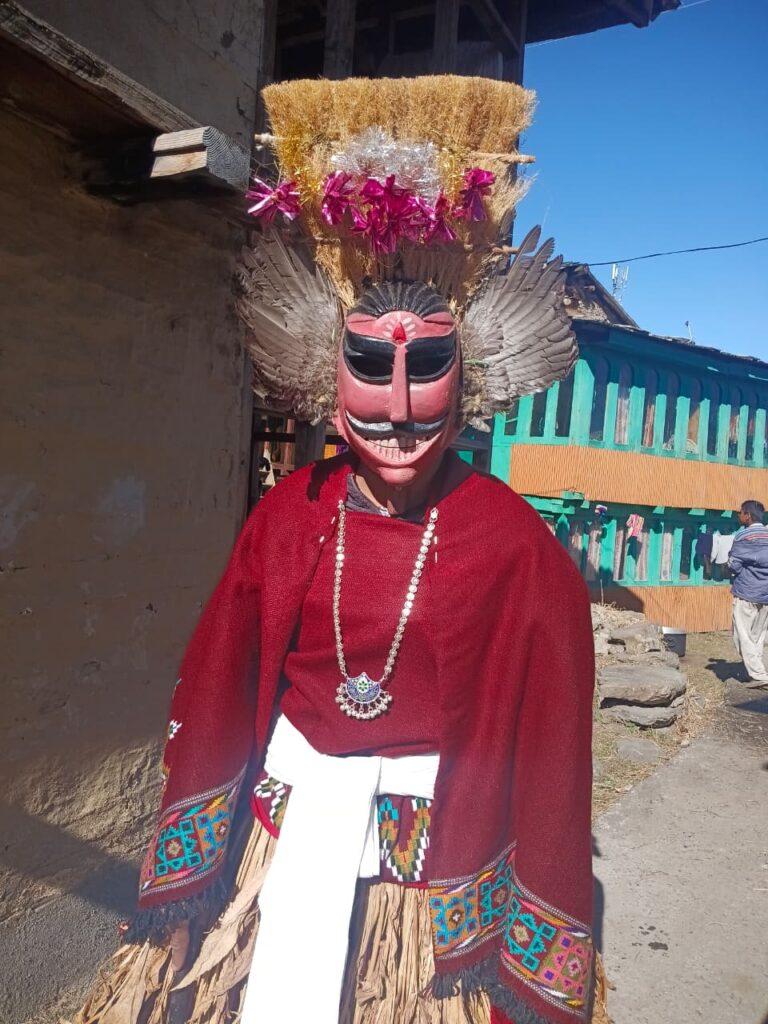
At the heart of the Mukhota dance are the magnificent wooden masks, locally crafted and preserved through generations. These masks are not merely decorative; they are sacred embodiments of divine and mythical beings.
- Mandhyala (Male Mask): Represents powerful male energies—gods, warriors, or protective spirits. These masks often feature bold expressions, wide eyes, and elaborate carvings symbolizing strength and authority.
- Mandhyali (Female Mask): Symbolizes feminine divinity, grace, and fertility. These masks are intricately designed with softer features and decorative elements reflecting beauty and nurturing power.
Some masks also depict demons or mythological characters, creating a dramatic interplay between divine and dark forces during the performance.
Each mask is hand-carved from wood by skilled local artisans, painted in vibrant natural colors, and adorned with traditional attire. They are treated with great reverence and stored carefully when not in use.
The Dance Performance
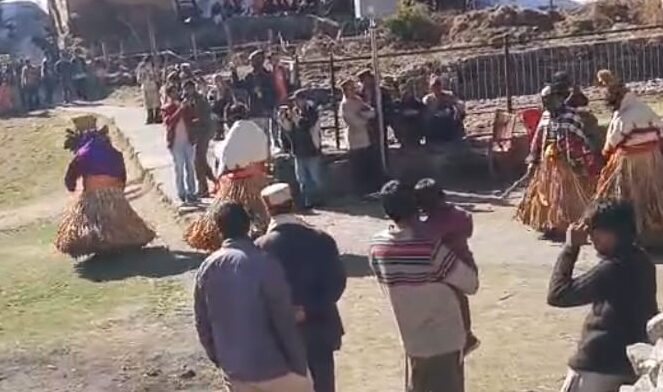
When the rhythmic beats of traditional drums echo through the valley, masked dancers dressed in colorful woolen garments step into the open courtyard. The movements are powerful, slow, and symbolic—each gesture carrying meaning passed down orally over centuries.
The performance often narrates mythological tales or symbolic battles between gods and demons. Through dramatic movements and ritual gestures, the dancers re-enact the eternal struggle between good and evil, ending with the triumph of divine forces.
Villagers watch with devotion, music fills the crisp mountain air, and the entire atmosphere becomes charged with spiritual energy.
Cultural and Spiritual Significance
The Mukhota dance is more than a performance—it is a spiritual cleansing ritual. Villagers believe that the presence of masked deities protects the community from illness, misfortune, and evil spirits for the coming year.
It also serves as:
- A preservation of ancestral heritage
- A platform for intergenerational bonding
- A symbol of identity for Sharchi village
- A reminder of the deep connection between nature, seasons, and spirituality
In a rapidly modernizing world, this ritual stands as a living testimony to the strength of local traditions.
A Tradition Worth Preserving
As tourism slowly grows in the Tirthan Valley, the Mukhota dance remains an authentic and sacred practice rather than a commercial show. Visitors who are fortunate enough to witness it experience not just a cultural event but a spiritual journey into Himalayan heritage.
The people of Sharchi take immense pride in keeping this centuries-old tradition alive. Through the rhythmic steps of masked dancers and the sacred celebration of Fagli, they ensure that their ancestors’ voices continue to echo through the valley.
The Mukhota dance of Sharchi is not just a ritual—it is a celebration of life, faith, and the eternal rhythm of the seasons in the heart of the Himalayas.